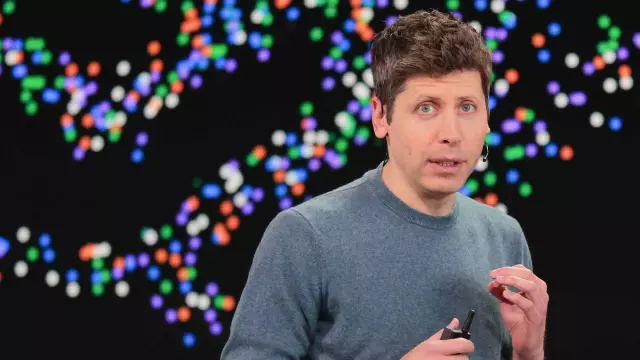
Sam Altman Defends AI Development Despite Acknowledging Potential 'Bad Things'
- Tags
- Tech News
- Artificial Intelligence
- OpenAI
- AI Safety
- Sam Altman
- Ethics
In a candid and revealing discussion with POLITICO’s Decoded, OpenAI CEO Sam Altman addressed the mounting anxieties surrounding the rapid development of artificial intelligence. As the architect behind one of the most transformative technologies in human history, Altman offered a controversial perspective: that society must be prepared to accept 'some bad things happening' as part of the unavoidable trade-off for the immense benefits AI promises to deliver.
The Trade-off of Innovation
Altman’s stance centers on the belief that the aggregate benefits of AI will outweigh the risks. He argues that by fostering a culture of innovation and maintaining a lighter regulatory framework, the world will see 'orders of magnitude more' positive outcomes than negative ones. However, this utilitarian view has drawn sharp criticism from skeptics and researchers who fear that 'bad things' could manifest as catastrophic, irreversible events rather than minor inconveniences.
Assessing the Risk
Concerns regarding AI are not merely speculative. Research from the MIT AI Risk Initiative highlights that approximately 18 of 24 identified risks carry a greater than 10% probability of causing catastrophic outcomes. These risks range from massive financial systemic collapse to large-scale loss of life. Critics point out that when the CEO of a company shaping this technology tells the public to 'accept' these risks, it highlights a profound disconnect between the optimism of Silicon Valley and the practical safety concerns of the general public.
Governance and Control
Altman also touched upon the debate regarding whether a singular, centralized body should regulate AI development to prevent runaway, 'rogue' systems. He expressed skepticism toward the idea that a single lab in San Francisco should hold the authority to determine how the world experiences the benefits of AI. Instead, he advocates for a broader, more distributed ecosystem.
The Impact on Employment and Society
For many, including the professional writing community, the immediate threat of AI is not necessarily a 'rogue' intelligence, but the displacement of entire job categories. As AI continues to automate repetitive tasks, the promise of increased efficiency often clashes with the reality of workforce instability. While advocates argue this allows for a more creative, less laborious future, the current transition period is causing widespread anxiety.
As we look to the future, it is clear that while AI offers a pathway to unprecedented efficiency and problem-solving, the conversation must go beyond simple corporate optimism. Without rigorous scrutiny and transparency, the 'bad things' Altman refers to could prove far more costly than the industry is currently willing to admit.
Comments (0)
Sign in to join the conversation.Sign in
Loading comments...