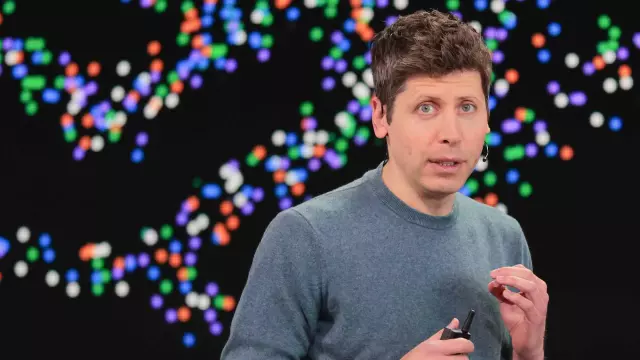
Sam Altman's Provocative Stance on AI: Why We Should 'Accept Some Bad Things' for Progress
- Tags
- Technology News
- Artificial Intelligence
- OpenAI
- AI Ethics
- AI Regulation
- Sam Altman
As artificial intelligence continues to permeate every aspect of our digital and professional lives, the debate over its risks and rewards has reached a fever pitch. In a recent interview with Decoded by POLITICO, OpenAI CEO Sam Altman offered a controversial perspective that is sure to spark debate among ethicists, developers, and the public alike: he suggested that the world should be willing to accept some negative outcomes in exchange for the overall benefits of AI technology.
The Trade-off of Innovation
Altman’s comments emphasize a philosophy of progress, arguing that while AI may introduce challenges, the net benefit to humanity will be 'orders of magnitude' higher than the drawbacks. He suggests that by allowing for a more open and less heavily regulated environment, society can harness the transformative power of AI more quickly. However, this 'move fast' approach stands in stark contrast to the growing concerns of experts who warn that we are approaching the limit of what can be safely managed.
The Risks of Moving Too Fast
While Altman remains optimistic, his stance comes at a time when industry experts are sounding the alarm. According to the MIT AI Risk Initiative, there is a significant statistical probability of catastrophic outcomes associated with advanced AI systems. Researchers have identified several high-stakes risks—including potential mass casualties or massive financial destabilization—that experts argue deserve more than just a passing acknowledgment.
For many, especially in creative and knowledge-based professions, the threat is more immediate. The fear that AI will replace human roles or be used for malicious purposes has created a climate of uncertainty. Critics argue that calling for society to 'accept' these risks is a dangerous oversimplification of complex socio-technical problems.
Centralization vs. Agency
Altman also addressed the ongoing debate regarding who should control the future of AI. He acknowledged the perspective of those who believe a single, highly regulated lab should hold the keys to the most powerful models to ensure safety. Ultimately, however, he leans toward a decentralized view, emphasizing that giving individuals the 'agency' to use and build with these tools is essential.
Whether or not the world will be able to mitigate these risks while still enjoying the convenience of AI tools like ChatGPT remains the defining question of our time. As we look ahead, the consensus is clear: we are venturing into uncharted territory where the line between breakthrough innovation and societal harm is becoming increasingly blurred.
Comments (0)
Sign in to join the conversation.Sign in
Loading comments...